K2-D3 5000
by XYMOGEN · Capsule
Supplement facts from the label of K2-D3 5000 by XYMOGEN: Vitamin D3 125 mcg, Vitamin K2 90 mcg.
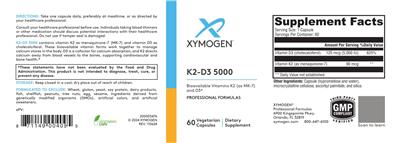
Supplement Facts
| Ingredient | Per serving | % DV | Upper limit (adults) |
|---|---|---|---|
| Vitamin D3 (Cholecalciferol) | 125 mcg | 625% | 100 mcg · 125% at label max ⚠ |
| Vitamin K2 (Menaquinone-7) | 90 mcg | — | — |
⚠ Above the upper limit: at the most servings a day printed on the label, at least one ingredient goes above the adult UL. Some ULs apply only to supplemental forms (shown on each ingredient page).
Upper limits: NIH ODS Fact Sheets for Health Professionals. Compared only where the unit converts and the limit applies to the form on the label.
On the label
For: Adult (18 - 50 Years) · No Allergies · Gluten Free · Dairy Free
Claim types: Nutrient · All Other · Structure/Function
Suggested/Recommended/Usage/Directions: Directions: Take one capsule daily, preferably at mealtime, or as directed by your healthcare professional.
Precautions re: All Other: Consult your healthcare professional before use.
Precautions re: Pregnant or Nursing or Prescription Medications: Individuals taking blood thinners or other medication should discuss potential interactions with their healthcare professional.
Precautions re: All Other: Do not use if tamper seal is damaged.
Formula re: Contains: K2-D3 5000 contains vitamin K2 as menaquinone-7 (MK-7) and vitamin D3 as cholecalciferol. These bioavailable vitamin forms work together to manage calcium stores in the body. D3 is a cofactor for calcium absorption, and K2 directs calcium away from blood vessels to the bones, supporting cardiovascular and bone health.
FDA Disclaimer Statement: These statements have not been evaluated by the Food and Drug Administration. This product is not intended to diagnose, treat, cure, or prevent any disease.
This page repeats what the label says and the official upper limits for healthy adults. It is not medical advice: ask a doctor, pharmacist or registered dietitian about your own intake, especially if you are pregnant, take medicines or have a health condition.
Label data: NIH Office of Dietary Supplements, Dietary Supplement Label Database (dsld.od.nih.gov), public domain. Upper limits: NIH ODS Fact Sheets for Health Professionals (values from the Institute of Medicine, Food and Nutrition Board).