D3 50,000
by XYMOGEN · Capsule
Supplement facts from the label of D3 50,000 by XYMOGEN: Vitamin D3 1,250 mcg.
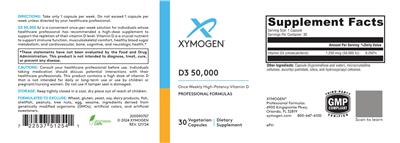
Supplement Facts
| Ingredient | Per serving | % DV | Upper limit (adults) |
|---|---|---|---|
| Vitamin D3 (Cholecalciferol) | 1,250 mcg | 6,250% | 100 mcg · 1,250% at label max ⚠ |
⚠ Above the upper limit: at the most servings a day printed on the label, at least one ingredient goes above the adult UL. Some ULs apply only to supplemental forms (shown on each ingredient page).
Upper limits: NIH ODS Fact Sheets for Health Professionals. Compared only where the unit converts and the limit applies to the form on the label.
On the label
For: Adult (18 - 50 Years) · Women (not pregnant or lactating) · No Allergies · Gluten Free · Dairy Free
Claim types: Nutrient · All Other · Structure/Function
Suggested/Recommended/Usage/Directions: Directions: Take only 1 capsule per week. Do not exceed 1 capsule per week unless directed by your healthcare professional.
Formula re: Contains: D3 50,000 IU is a convenient once-per-week solution for individuals whose healthcare professional has recommended a high-dose supplement to support the repletion of their vitamin D level. Vitamin D is a crucial nutrient to support immune function, musculoskeletal comfort, healthy blood sugar metabolism, and cardiovascular, bone, cognitive, and neurologic health.
FDA Disclaimer Statement: These statements have not been evaluated by the Food and Drug Administration. This product is not intended to diagnose, treat, cure, or prevent any disease.
Precautions re: All Other: Cautions: Consult your healthcare professional before use.
Precautions re: Pregnant or Nursing or Prescription Medications: Individuals taking medication should discuss potential interactions with their healthcare professionals. This product contains a high dose of vitamin D that is not intended for daily or long-term use or use by children or pregnant/nursing women.
Precautions re: Children: This product contains a high dose of vitamin D that is not intended for daily or long-term use or use by children or pregnant/nursing women.
This page repeats what the label says and the official upper limits for healthy adults. It is not medical advice: ask a doctor, pharmacist or registered dietitian about your own intake, especially if you are pregnant, take medicines or have a health condition.
Label data: NIH Office of Dietary Supplements, Dietary Supplement Label Database (dsld.od.nih.gov), public domain. Upper limits: NIH ODS Fact Sheets for Health Professionals (values from the Institute of Medicine, Food and Nutrition Board).