Vitamin D3 50 mcg (2,000 IU)
by NatureWise · Softgel Capsule
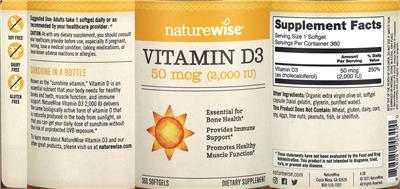
Supplement facts from the label of Vitamin D3 50 mcg (2,000 IU) by NatureWise: Vitamin D3 50 mcg.
Supplement Facts
| Ingredient | Per serving | % DV | Upper limit (adults) |
|---|---|---|---|
| Vitamin D3 (Cholecalciferol) | 50 mcg | 250% | 100 mcg · 50% at label max |
Upper limits: NIH ODS Fact Sheets for Health Professionals. Compared only where the unit converts and the limit applies to the form on the label.
On the label
For: Adult (18 - 50 Years) · Gluten Free · Dairy Free
Claim types: Nutrient · All Other · Structure/Function
Formulation re: Does NOT Contain: Soy free Dairy free Gluten free
Suggested/Recommended/Usage/Directions: Suggested use: Adults take 1 softgel daily or as recommended by your healthcare provider.
Precautions re: Pregnant or Nursing or Prescription Medications: Caution: As with any dietary supplement, you should consult your healthcare provider before use, especially if pregnant, nursing, have a medical condition, taking medications, or have known adverse reactions or allergies.
Formulation re: Other: Sunshine in a bottle
Formula re: Contains: Known as the "sunshine vitamin," Vitamin D is an essential nutrient that your body needs for healthy bones and teeth, muscle function, and immune support. NatureWise Vitamin D3 2,000 IU delivers the same biologically active form of vitamin D that is naturally produced in the body from sunlight, so that you can get your daily dose of sunshine without the risk of unprotected UVB exposure.
All Other Content: To learn more about NatureWise Vitamin D3 and our other great products, please visit us as naturewise.com.
This page repeats what the label says and the official upper limits for healthy adults. It is not medical advice: ask a doctor, pharmacist or registered dietitian about your own intake, especially if you are pregnant, take medicines or have a health condition.
Label data: NIH Office of Dietary Supplements, Dietary Supplement Label Database (dsld.od.nih.gov), public domain. Upper limits: NIH ODS Fact Sheets for Health Professionals (values from the Institute of Medicine, Food and Nutrition Board).