OcuPlus
by Karuna · Capsule
Supplement facts from the label of OcuPlus by Karuna: Vitamin A 3,750 mcg, Vitamin C 500 mg, Vitamin E 134 mg, Riboflavin 50 mg….
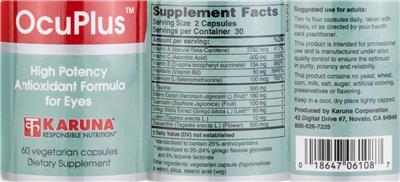
Supplement Facts
| Ingredient | Per serving | % DV | Upper limit (adults) |
|---|---|---|---|
| Vitamin A (Beta-Carotene, Natural) | 3,750 mcg | 417% | — |
| Vitamin C (Ascorbic Acid) | 500 mg | 556% | 2,000 mg · 25% at label max |
| Vitamin E (D-Alpha-Tocopheryl Succinate) | 134 mg | 893% | 1,000 mg · 13% at label max |
| Riboflavin (Vitamin B2) | 50 mg | 3,846% | — |
| Selenium (L-Selenomethionine) | 100 mcg | 182% | 400 mcg · 25% at label max |
| L-Taurine | 500 mg | — | — |
| Bilberry Fruit Extract (Vaccinium uliginosum L. Fruit Extract) | 180 mg | — | — |
| Quercetin (Sophora japonica) | 100 mg | — | — |
| Ginkgo biloba Leaf Extract (Ginkgo Flavone Glycosides, Terpene Lactones) | 60 mg | — | — |
| Lutein (Tagetes erecta L.) | 10 mg | — | — |
| Zeaxanthin (Tagetes erecta L.) | 500 mcg | — | — |
Upper limits: NIH ODS Fact Sheets for Health Professionals. Compared only where the unit converts and the limit applies to the form on the label.
On the label
For: Adult (18 - 50 Years) · Dairy Free · Sugar Free
Claim types: All Other
Formulation re: Other: High potency antioxidant formula for eyes
Brand IP Statement(s) re: (c), (TM), (SM): Karuna Responsible Nutrition
Suggested/Recommended/Usage/Directions: Suggested use for adults: Two to four capsules daily, taken with meals, or as directed by your health care practitioner.
Precautions re: All Other: This product is intended for professional use and is manufactured under strict quality control to ensure the optimum in purity, potency and reliability.
Formulation re: Other: This product is intended for professional use and is manufactured under strict quality control to ensure the optimum in purity, potency and reliability.
Formulation re: Does NOT Contain: This product contains no yeast, wheat, corn, milk, salt, sugar, artificial coloring, preservatives or flavoring.
This page repeats what the label says and the official upper limits for healthy adults. It is not medical advice: ask a doctor, pharmacist or registered dietitian about your own intake, especially if you are pregnant, take medicines or have a health condition.
Label data: NIH Office of Dietary Supplements, Dietary Supplement Label Database (dsld.od.nih.gov), public domain. Upper limits: NIH ODS Fact Sheets for Health Professionals (values from the Institute of Medicine, Food and Nutrition Board).