PS100 100 mg
by Jarrow Formulas · Softgel Capsule
Supplement facts from the label of PS100 100 mg by Jarrow Formulas: Phosphatidylserine 100 mg.
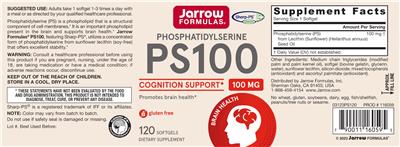
Supplement Facts
| Ingredient | Per serving | % DV | Upper limit (adults) |
|---|---|---|---|
| Phosphatidylserine (Lecithin) | 100 mg | — | — |
Upper limits: NIH ODS Fact Sheets for Health Professionals. Compared only where the unit converts and the limit applies to the form on the label.
On the label
For: Adult (18 - 50 Years) · No Allergies · Gluten Free · Dairy Free
Claim types: Nutrient · All Other · Structure/Function
Suggested/Recommended/Usage/Directions: Suggested use: Adults take 1 softgel 1-3 times a day with a meal or as directed by your qualified healthcare professional.
Formula re: Contains: Phosphatidylserine (PS) is a phospholipid that is a structural component of cell membranes. It is an important phospholipid present in the brain and supports brain health. Jarrow Formulas PS100, featuring Sharp-PS, utilize a concentrated form of phosphatidylserine from sunflower lecithin (soy-free) that offers excellent stability.
Precautions re: Pregnant or Nursing or Prescription Medications: Warning: Consult a healthcare professional before using this product if you are pregnant, nursing, under the age of 18, are taking medication or have a medical condition; if adverse reactions occur, discontinue use.
Precautions re: Children: Warning: Consult a healthcare professional before using this product if you are pregnant, nursing, under the age of 18, are taking medication or have a medical condition; if adverse reactions occur, discontinue use.
Precautions re: Children: Keep out of the reach of children.
Storage: Store in a cool, dry place.
This page repeats what the label says and the official upper limits for healthy adults. It is not medical advice: ask a doctor, pharmacist or registered dietitian about your own intake, especially if you are pregnant, take medicines or have a health condition.
Label data: NIH Office of Dietary Supplements, Dietary Supplement Label Database (dsld.od.nih.gov), public domain. Upper limits: NIH ODS Fact Sheets for Health Professionals (values from the Institute of Medicine, Food and Nutrition Board).