Alpha GPC 300 mg
by Cognitive Compounds · Capsule
Supplement facts from the label of Alpha GPC 300 mg by Cognitive Compounds: Alpha-Glycerylphosphorylcholine 300 mg.
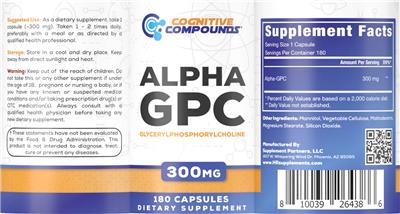
Supplement Facts
| Ingredient | Per serving | % DV | Upper limit (adults) |
|---|---|---|---|
| Alpha-Glycerylphosphorylcholine | 300 mg | — | — |
Upper limits: NIH ODS Fact Sheets for Health Professionals. Compared only where the unit converts and the limit applies to the form on the label.
On the label
For: Adult (18 - 50 Years) · Women (not pregnant or lactating)
Claim types: All Other · Structure/Function
Suggested/Recommended/Usage/Directions: Suggested Use: As a dietary supplement, take 1 capsule (~300 mg). Taken 1-2 times daily, preferably with a meal or as directed by a qualified health professional.
Storage: Storage: Store in a cool and dry place. Keep away from direct sunlight and heat.
Precautions re: Children: Warning: Keep out of reach of children. Do not take this or any other supplement if under the age of 18, pregnant or nursing a baby or if you have any known or suspected medical conditions and/or taking prescription drug(s) or OTC medication(s).
Precautions re: Pregnant or Nursing or Prescription Medications: Do not take this or any other supplement if under the age of 18, pregnant or nursing a baby or if you have any known or suspected medical conditions and/or taking prescription drug(s) or OTC medication(s).
Precautions re: All Other: Always consult with a qualified health physician before taking any new dietary supplement.
FDA Disclaimer Statement: These statements have not been evaluated by the Food and Drug Administration. This product is not intended to diagnose, treat, cure or prevent any diseases.
This page repeats what the label says and the official upper limits for healthy adults. It is not medical advice: ask a doctor, pharmacist or registered dietitian about your own intake, especially if you are pregnant, take medicines or have a health condition.
Label data: NIH Office of Dietary Supplements, Dietary Supplement Label Database (dsld.od.nih.gov), public domain. Upper limits: NIH ODS Fact Sheets for Health Professionals (values from the Institute of Medicine, Food and Nutrition Board).