D3 5000 IU K2 180 mcg
by NutraBio · Capsule
Supplement facts from the label of D3 5000 IU K2 180 mcg by NutraBio: Vitamin D3 125 mcg, Vitamin K2 180 mcg.
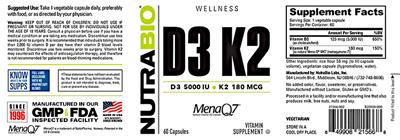
Supplement Facts
| Ingredient | Per serving | % DV | Upper limit (adults) |
|---|---|---|---|
| Vitamin D3 (Cholecalciferol) | 125 mcg | 650% | 100 mcg · 125% at label max ⚠ |
| Vitamin K2 (Mena Q7) | 180 mcg | 150% | — |
⚠ Above the upper limit: at the most servings a day printed on the label, at least one ingredient goes above the adult UL. Some ULs apply only to supplemental forms (shown on each ingredient page).
Upper limits: NIH ODS Fact Sheets for Health Professionals. Compared only where the unit converts and the limit applies to the form on the label.
On the label
For: Vegetarian · Adult (18 - 50 Years) · Kosher · Women (not pregnant or lactating) · Gluten Free
Claim types: Nutrient · All Other · Structure/Function
Suggested/Recommended/Usage/Directions: Suggested Use: Take 1 vegetable capsule daily, preferably with food, or as directed by your physician.
Precautions re: Children: Warning: Keep out of reach of children. Not for use by individuals under the age of 18 years.
Precautions re: Pregnant or Nursing or Prescription Medications: Do not use if pregnant or nursing. Consult a physician before use if you have a medical condition or are taking any medication. It is recommended that individuals taking more than 2,000 IU vitamin D per day have their vitamin D blood levels monitored. Vitamin K2 may counteract the effects of anticoagulation therapy, and therefore is not recommended for patients on blood-thinning medications.
Precautions re: All Other: Discontinue use two weeks prior to surgery.
Seals/Symbols: Know What's in your Supps Full label Disclosure with no proprietary blends
FDA Disclaimer Statement: These statements have not been evaluated by the Food and Drug Administration. This product is not intended to diagnose, treat, cure or prevent any disease.
This page repeats what the label says and the official upper limits for healthy adults. It is not medical advice: ask a doctor, pharmacist or registered dietitian about your own intake, especially if you are pregnant, take medicines or have a health condition.
Label data: NIH Office of Dietary Supplements, Dietary Supplement Label Database (dsld.od.nih.gov), public domain. Upper limits: NIH ODS Fact Sheets for Health Professionals (values from the Institute of Medicine, Food and Nutrition Board).