Methyl B-12 1,000 mcg
by NOW · Lozenge
Supplement facts from the label of Methyl B-12 1,000 mcg by NOW: Vitamin B12 1.0 mg.
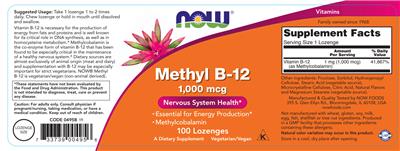
Supplement Facts
| Ingredient | Per serving | % DV | Upper limit (adults) |
|---|---|---|---|
| Vitamin B12 (Methylcobalamin) | 1.0 mg | 41,667% | — |
Upper limits: NIH ODS Fact Sheets for Health Professionals. Compared only where the unit converts and the limit applies to the form on the label.
On the label
For: Vegan · Vegetarian · Adult (18 - 50 Years) · Kosher · Gluten Free · Dairy Free
Claim types: Nutrient · All Other · Structure/Function
Suggested/Recommended/Usage/Directions: Suggested usage: Take 1 lozenge 1 to 2 times daily. Chew lozenge or hold in mouth until dissolved and swallow.
Formula re: Contains: Vitamin B-12 is necessary for the production of energy from fats and proteins and is well known for its critical role in DNA synthesis, as well as in homocysteine metabolism. Methylcobalamin is the co-enzyme form of Vitamin B-12 that has been found to be especially critical in the maintenance of a healthy nervous system. Dietary sources are almost exclusively of animal origin (meat and dairy) and
Formulation re: Vegetarian/Vegan: NOW Methyl B-12 is vegetarian/vegan (non-animal derived).
FDA Disclaimer Statement: These statements have not been evaluated by the Food and Drug Administration. This product is not intended to diagnose, treat, cure or prevent any disease.
Precautions re: Children: Caution: For adults only. Keep out of reach of children.
Precautions re: Pregnant or Nursing or Prescription Medications: Consult physician if pregnant/nursing, taking medication, or have a medical condition.
This page repeats what the label says and the official upper limits for healthy adults. It is not medical advice: ask a doctor, pharmacist or registered dietitian about your own intake, especially if you are pregnant, take medicines or have a health condition.
Label data: NIH Office of Dietary Supplements, Dietary Supplement Label Database (dsld.od.nih.gov), public domain. Upper limits: NIH ODS Fact Sheets for Health Professionals (values from the Institute of Medicine, Food and Nutrition Board).