Betaine HCl 648 mg
by NOW · Capsule
Supplement facts from the label of Betaine HCl 648 mg by NOW: Betaine Hydrochloride 1,296 mg, acid-stable Protease 300 mg.
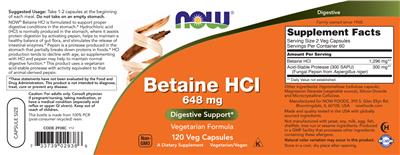
Supplement Facts
| Ingredient | Per serving | % DV | Upper limit (adults) |
|---|---|---|---|
| Betaine Hydrochloride | 1,296 mg | — | — |
| acid-stable Protease (Pepsin, Fungal) | 300 mg | — | — |
Upper limits: NIH ODS Fact Sheets for Health Professionals. Compared only where the unit converts and the limit applies to the form on the label.
On the label
For: Vegan · Vegetarian · Adult (18 - 50 Years) · Kosher · Halal · Gluten Free · Dairy Free
Claim types: All Other · Structure/Function
Suggested/Recommended/Usage/Directions: Suggested Usage: Take 1-2 capsules at the beginning of each meal. Do not take on an empty stomach.
Precautions re: All Other: Do not take on an empty stomach.
Formula re: Contains: NOW Betaine HCl is formulated to support proper digestive conditions in the stomach. Hydrochloric Acid (HCl) is normally produced in the stomach, where it assists protein digestion by activating pepsin, helps to maintain a healthy balance of gut flora, and stimulates the release of intestinal enzymes. Pepsin is a protease produced in the stomach that partially breaks down proteins in foods. HCl pr
FDA Disclaimer Statement: These statements have not been evaluated by the Food and Drug Administration. This product is not intended to diagnose, treat, cure or prevent any disease.
Precautions re: Children: Caution: For adults only.
Precautions re: Pregnant or Nursing or Prescription Medications: Consult physician if pregnant/nursing, taking medication, or have a medical condition (especially acid reflux or upper GI ulcers).
This page repeats what the label says and the official upper limits for healthy adults. It is not medical advice: ask a doctor, pharmacist or registered dietitian about your own intake, especially if you are pregnant, take medicines or have a health condition.
Label data: NIH Office of Dietary Supplements, Dietary Supplement Label Database (dsld.od.nih.gov), public domain. Upper limits: NIH ODS Fact Sheets for Health Professionals (values from the Institute of Medicine, Food and Nutrition Board).