Vitamin D3 3000 IU
by Kala Health · Capsule
Supplement facts from the label of Vitamin D3 3000 IU by Kala Health: Vitamin D3 75 mcg.
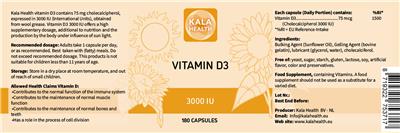
Supplement Facts
| Ingredient | Per serving | % DV | Upper limit (adults) |
|---|---|---|---|
| Vitamin D3 (Cholecalciferol) | 75 mcg | 1,500% | 100 mcg · 75% at label max |
Upper limits: NIH ODS Fact Sheets for Health Professionals. Compared only where the unit converts and the limit applies to the form on the label.
On the label
For: Children 4 or More Years of Age · Adult (18 - 50 Years) · Gluten Free · Sugar Free
Claim types: Nutrient · All Other · Structure/Function
Formula re: Contains: Kala Health vitamin D3 contains 75mg cholecalciferol, expressed in 3000 IU (International Units), obtained from wool grease. Vitamin D3 3000 IU offers a high supplementary dosage, additional to nutrition and the production by the body under influence of sun light.
Suggested/Recommended/Usage/Directions: Recommended dosage: Adults take 1 capsule per day, or as recommended. Best taken with (fatty) meals. Do not exceed recommended dosage. This product is not suitable for children less than 11 years of age.
Precautions re: Children: This product is not suitable for children less than 11 years of age. Storage: Store in a dry place at room temperature, and out of reach of small children.
Storage: Storage: Store in a dry place at room temperature, and out of reach of small children.
Formulation re: Other: Allowed health claims vitamin D: Contributes to the normal function of the immune system Contributes to the maintenance of normal muscle function Contributes to the maintenance of normal bones and teeth Has a role in the process of cell division
Formulation re: Does NOT Contain: Free of: Yeast, sugar, starch, gluten, lactose, soy, artificial flavor, color and preservatives.
This page repeats what the label says and the official upper limits for healthy adults. It is not medical advice: ask a doctor, pharmacist or registered dietitian about your own intake, especially if you are pregnant, take medicines or have a health condition.
Label data: NIH Office of Dietary Supplements, Dietary Supplement Label Database (dsld.od.nih.gov), public domain. Upper limits: NIH ODS Fact Sheets for Health Professionals (values from the Institute of Medicine, Food and Nutrition Board).