BCAA5000
by Evlution Nutrition · Capsule
Supplement facts from the label of BCAA5000 by Evlution Nutrition: L-Leucine 2,500 mg, L-Valine 1,250 mg, L-Isoleucine 1,250 mg.
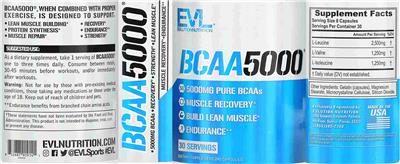
Supplement Facts
| Ingredient | Per serving | % DV | Upper limit (adults) |
|---|---|---|---|
| L-Leucine | 2,500 mg | — | — |
| L-Valine | 1,250 mg | — | — |
| L-Isoleucine | 1,250 mg | — | — |
Upper limits: NIH ODS Fact Sheets for Health Professionals. Compared only where the unit converts and the limit applies to the form on the label.
On the label
For: Adult (18 - 50 Years)
Claim types: Nutrient · All Other · Structure/Function
Formulation re: Other: BCAA5000, when combined with proper exercise, is designed to support: Lean muscle building Protein synthesis Muscle repair Recovery Endurance Strength Endurance benefits from branched chain amino acids.
Suggested/Recommended/Usage/Directions: Suggested use: As a dietary supplement, take 1 serving of BCAA5000 one to three times daily. Consume between meals, 30-45 minutes before workouts, and/or immediately after workouts.
Precautions re: Pregnant or Nursing or Prescription Medications: Warning: Not for use by those with pre-existing medical conditions, those taking any medications or those under the age of 18.
Precautions re: Children: Warning: Not for use by those with pre-existing medical conditions, those taking any medications or those under the age of 18. Keep out of reach of children and pets.
FDA Disclaimer Statement: These statements have not been evaluated by the Food and Drug Administration. This product is not intended to diagnose, treat, cure, or prevent any disease.
All Other Content: Instagram Facebook Twitter @EVLSports #EVL
This page repeats what the label says and the official upper limits for healthy adults. It is not medical advice: ask a doctor, pharmacist or registered dietitian about your own intake, especially if you are pregnant, take medicines or have a health condition.
Label data: NIH Office of Dietary Supplements, Dietary Supplement Label Database (dsld.od.nih.gov), public domain. Upper limits: NIH ODS Fact Sheets for Health Professionals (values from the Institute of Medicine, Food and Nutrition Board).