HistDAO
by XYMOGEN · Capsule
Supplement facts from the label of HistDAO by XYMOGEN: Diamine Oxidase 600 mcg.
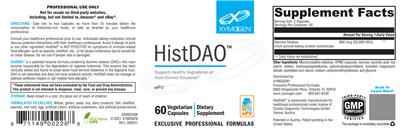
Supplement Facts
| Ingredient | Per serving | % DV | Upper limit (adults) |
|---|---|---|---|
| Diamine Oxidase (Porcine Kidney Protein concentrate) | 600 mcg | — | — |
Upper limits: NIH ODS Fact Sheets for Health Professionals. Compared only where the unit converts and the limit applies to the form on the label.
On the label
For: Adult (18 - 50 Years) · Gluten Free · Dairy Free
Claim types: All Other · Structure/Function
Precautions re: All Other: Professional use only Not for resale on third-party websites, including, but not limited to, Amazon and eBay.
Suggested/Recommended/Usage/Directions: Directions: Take one to two capsules no more than 15 minutes before consumption of histamine-rich foods, or take as directed by your healthcare professional.
Precautions re: All Other: Consult your healthcare professional prior to use. Do not use if tamper seal is damaged.
Precautions re: Pregnant or Nursing or Prescription Medications: Individuals taking medication should discuss potential interactions with their healthcare professional.
Precautions re: Allergies: Avoid if allergic to pork or any other ingredient. HistDAO is not effective for symptoms of immune-related food allergies, such as peanuts, shellfish, etc., or for gluten intolerance due to sensitivity or celiac disease.
Brand IP Statement(s) re: (c), (TM), (SM): HistDAO is a patented enzyme formula containing diamine oxidase (DAO) - the main enzyme responsible for the degradation of ingested histamine.
This page repeats what the label says and the official upper limits for healthy adults. It is not medical advice: ask a doctor, pharmacist or registered dietitian about your own intake, especially if you are pregnant, take medicines or have a health condition.
Label data: NIH Office of Dietary Supplements, Dietary Supplement Label Database (dsld.od.nih.gov), public domain. Upper limits: NIH ODS Fact Sheets for Health Professionals (values from the Institute of Medicine, Food and Nutrition Board).