Pu Erh Tea Cakes
by My Cup of Tee · Other (e.g. tea bag)
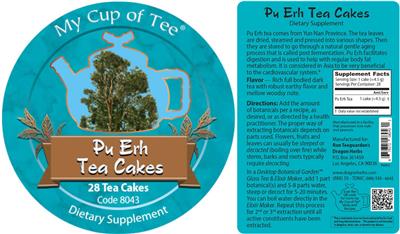
Supplement facts from the label of Pu Erh Tea Cakes by My Cup of Tee: Pu-erh Tea 4.5 Gram(s).
Supplement Facts
| Ingredient | Per serving | % DV | Upper limit (adults) |
|---|---|---|---|
| Pu-erh Tea | 4.5 Gram(s) | — | — |
Upper limits: NIH ODS Fact Sheets for Health Professionals. Compared only where the unit converts and the limit applies to the form on the label.
On the label
For: Adult (18 - 50 Years)
Claim types: All Other · Structure/Function
Formula re: Contains: Pu Erh tea comes from Yun Nan Province. The tea leaves are dried, steamed and pressed into various shapes.
Formulation re: Other: Then they are stored to go through a natural gentle aging process that is called post fermentation. Pu Erh facilitates digestion and is used to help with regular body fat metabolism. It is considered in Asia to be very beneficial to the cardiovascular system. Flavor - Rich full bodied dark tea with robust earthy flavor and mellow woodsy note
Suggested/Recommended/Usage/Directions: Directions: Add the amount of botanicals per a recipe, as desired, or as directed by a health practitioner. The proper way of extracting botanicals depends on parts used. Flowers, fruits and leaves can usually be steeped or decocted (boiling over fire) while stems, barks and roots typically require decocting. In a Desktop Botanical Garden Glass Tea & Elixir maker, add 1 part botanical(s) and 5-8
All Other Content: Scan the QR code for more my My Cup of Tee Ideas and Recipes (888) 55-TONIC
FDA Disclaimer Statement: These statements have not been evaluated by the Food and Drug Administration. This product is not intended to diagnose, treat, cure, or prevent any disease.
Precautions re: Allergies: Manufactured in a facility that processes tree nuts and peanuts.
This page repeats what the label says and the official upper limits for healthy adults. It is not medical advice: ask a doctor, pharmacist or registered dietitian about your own intake, especially if you are pregnant, take medicines or have a health condition.
Label data: NIH Office of Dietary Supplements, Dietary Supplement Label Database (dsld.od.nih.gov), public domain. Upper limits: NIH ODS Fact Sheets for Health Professionals (values from the Institute of Medicine, Food and Nutrition Board).