Project Gains
by Anabolic Warfare · Capsule
Supplement facts from the label of Project Gains by Anabolic Warfare: D-Aspartic Acid 1.0 Gram(s), Mediator 50P 600 mg, Ajuga turkestanica extract 200 mg, Pine Bark Extract 150 mg….
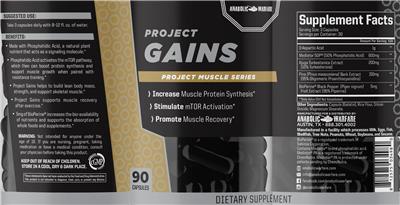
Supplement Facts
| Ingredient | Per serving | % DV | Upper limit (adults) |
|---|---|---|---|
| D-Aspartic Acid | 1.0 Gram(s) | — | — |
| Mediator 50P (Phosphatidic Acid) | 600 mg | — | — |
| Ajuga turkestanica extract (Turkesterone) | 200 mg | — | — |
| Pine Bark Extract (Oligomeric Proanthocyanidins) | 150 mg | — | — |
| BioPerine Black Pepper fruit extract (Piperine) | 5.0 mg | — | — |
Upper limits: NIH ODS Fact Sheets for Health Professionals. Compared only where the unit converts and the limit applies to the form on the label.
On the label
For: Adult (18 - 50 Years)
Claim types: All Other · Structure/Function
Suggested/Recommended/Usage/Directions: Suggested Use: Take 3 capsules daily with 8-12 fl. oz. of water.
Formula re: Contains: Benefits: Made with Phosphatidic Acid, a natural plant nutrient that acts as a signaling molecule. Phosphatidic Acid activates the mTOR pathway, which then can boost protein synthesis and support muscle growth when paired with resistance training.
Formulation re: Other: Project Gains helps to build lean body mass, strength, and support skeletal muscle. Project Gains supports muscle recovery after exercise.
Formula re: Contains: 5 mg of BioPerine increases the bio-availability of nutrients and supports the absorption of whole foods and supplements.
Precautions re: Children: Warning: Not intended for anyone under the age of 18.
Precautions re: Pregnant or Nursing or Prescription Medications: If you are nursing, pregnant, taking medication or have a medical condition, consult your physician before taking this product.
This page repeats what the label says and the official upper limits for healthy adults. It is not medical advice: ask a doctor, pharmacist or registered dietitian about your own intake, especially if you are pregnant, take medicines or have a health condition.
Label data: NIH Office of Dietary Supplements, Dietary Supplement Label Database (dsld.od.nih.gov), public domain. Upper limits: NIH ODS Fact Sheets for Health Professionals (values from the Institute of Medicine, Food and Nutrition Board).