Micronized Creatine Powder Unflavored
by ON Optimum Nutrition · Powder
Supplement facts from the label of Micronized Creatine Powder Unflavored by ON Optimum Nutrition: Creatine Monohydrate 5.0 Gram(s).
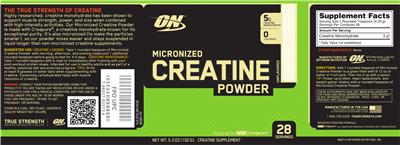
Supplement Facts
| Ingredient | Per serving | % DV | Upper limit (adults) |
|---|---|---|---|
| Creatine Monohydrate | 5.0 Gram(s) | — | — |
Upper limits: NIH ODS Fact Sheets for Health Professionals. Compared only where the unit converts and the limit applies to the form on the label.
On the label
For: Adult (18 - 50 Years) · Women (not pregnant or lactating)
Claim types: All Other · Structure/Function
Formulation re: Other: The true strength of creatine Highly researched, creatine monohydrate has been shown to support muscle strength, power, and size when combined with high-intensity activities.
Formula re: Contains: Our Micronized Creatine Powder is made with Creapure, a creatine monohydrate known for its exceptional purity. It's also micronized (to make the particles smaller), so our powder mixes easier and stays suspended in liquid longer than non-micronized creatine supplements.
Suggested/Recommended/Usage/Directions: Suggested Use: Creatine Loading: Take 1 rounded teaspoon of Micronized Creatine Powder with morning, afternoon, and evening meals and 1 additional rounded teaspoon before going to bed for 4-5 days. Creatine Maintenance: Take 1 rounded teaspoon with a meal or immediately after training with your post-workout protein shake. Intended for use in healthy adults and as part of a healthy, balanced diet a
Precautions re: Pregnant or Nursing or Prescription Medications: Warning: Consult your physician before using this product if you are taking any medications or are under a physician’s care for a medical condition. Not for use by those under the age of 18 or women that are pregnant, trying to get pregnant, or nursing.
Precautions re: Children: Not for use by those under the age of 18 or women that are pregnant, trying to get pregnant, or nursing.
Storage: Store in a cool, dry place.
This page repeats what the label says and the official upper limits for healthy adults. It is not medical advice: ask a doctor, pharmacist or registered dietitian about your own intake, especially if you are pregnant, take medicines or have a health condition.
Label data: NIH Office of Dietary Supplements, Dietary Supplement Label Database (dsld.od.nih.gov), public domain. Upper limits: NIH ODS Fact Sheets for Health Professionals (values from the Institute of Medicine, Food and Nutrition Board).