Aminolase TPA 250 mg
by Arthur Andrew Medical · Capsule
Supplement facts from the label of Aminolase TPA 250 mg by Arthur Andrew Medical: Aminolase TPA Acid Stable Protease Blend 250 mg.
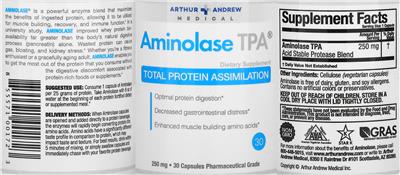
Supplement Facts
| Ingredient | Per serving | % DV | Upper limit (adults) |
|---|---|---|---|
| Aminolase TPA Acid Stable Protease Blend | 250 mg | — | — |
Upper limits: NIH ODS Fact Sheets for Health Professionals. Compared only where the unit converts and the limit applies to the form on the label.
On the label
For: Adult (18 - 50 Years) · Kosher · Gluten Free · Dairy Free
Claim types: All Other · Structure/Function
Formulation re: Other: Aminolase is a powerful enzyme blend that maximizes the benefits of ingested protein, allowing it to be utilized for muscle building, recovery, and immune function. In a university study, Aminolase improved whey protein bioavailability far greater than the body's natural digestive process (pancreatin) alone. Wasted protein can cause gas, bloating, and kidney stress. Whether you're a fitness enthus
Suggested/Recommended/Usage/Directions: Suggested Use: Consume 1 capsule of Aminolase per 25 grams of protein. Take Aminolase with 8 oz of water at the beginning of each protein fortified dietary or supplemented meal. Delivery Methods: When Aminolase capsules are opened and added directly to a protein beverage, the enzymes will rapidly begin converting protein beverage, the enzymes will rapidly begin converting protein into amino acids.
Formulation re: Other: Total protein assimilation Optimal protein digestion Decreased gastrointestinal distress Enhanced muscle building amino acids Pharmaceutical grade
Formulation re: Does NOT Contain: Aminolase is free of dairy, gluten, and soy allergens. Contains no artificial colors or preservatives.
Precautions re: Children: Keep out of reach of children.
Storage: Store in a cool dry place with lid tightly closed.
This page repeats what the label says and the official upper limits for healthy adults. It is not medical advice: ask a doctor, pharmacist or registered dietitian about your own intake, especially if you are pregnant, take medicines or have a health condition.
Label data: NIH Office of Dietary Supplements, Dietary Supplement Label Database (dsld.od.nih.gov), public domain. Upper limits: NIH ODS Fact Sheets for Health Professionals (values from the Institute of Medicine, Food and Nutrition Board).