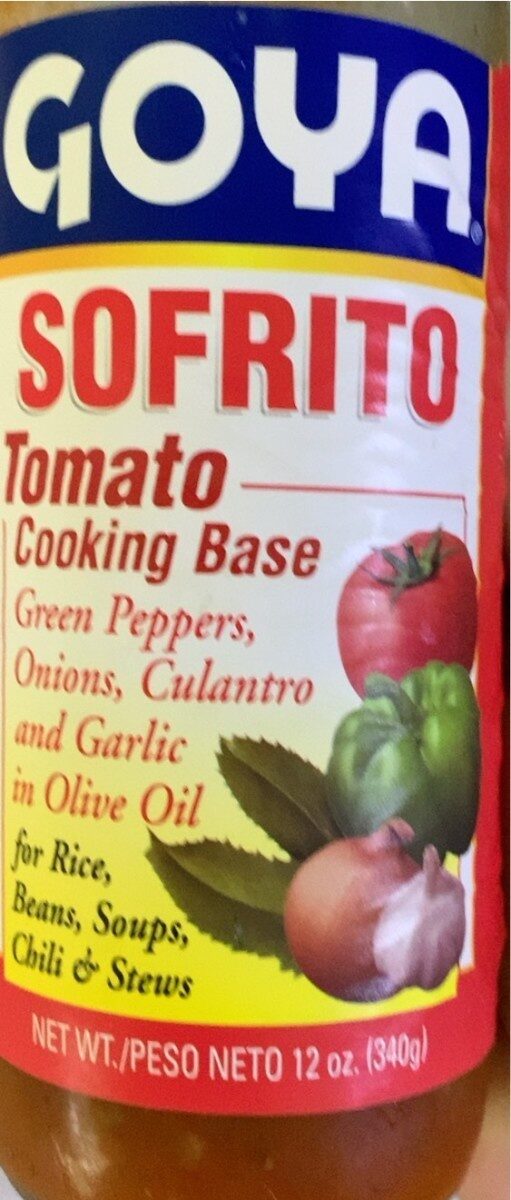
Tomato cooking base
Prefix 004 was issued by GS1 US. It tells you where the code was registered, not where the product was made.
Nutrition
| Nutrient | 100 g | Daily Value |
|---|---|---|
| Calories | 58 kcal | 3% |
| Total fat | 1.9 g | 2% |
| Saturated fat | 1.9 g | 10% |
| Total carbohydrate | 7.7 g | 3% |
| Total sugars | 7.7 g | — |
| Dietary fiber | 2.7 g | 10% |
| Protein | 0.00 g | 0% |
| Sodium | 0.12 g | 5% |
Open Food Facts, ODbL, record updated September 15, 2026 · Daily Values: 21 CFR 101.9 (FDA).
Ingredients
Water, tomato paste, green peppers, soybean oil, modified food starch, dehydrated onions, textured vegetable protein (soy flour, caramel color), salt, culantro, onion powder, olive oil, monosodium glutamate, paprika, citric acid, natural bacon flavor (hydrolyzed corn, soy and wheat protein, maltodextrin, salt, natural flavors, bacon fat, silicon dioxide to prevent caking, natural smoke flavor, disodium inosinate, and guanylate), natural and artificial ham flavor (hydrolyzed soy and corn protein, sail, corn syrup solids, yeast extract, canola oil, brown sugar, natural flavor, silicon dioxide, maltodextrin, artificial flavor, disodium inosinate, and disodium guanylate), garlic powder, oregano and black pepper.
- E150cAmmonia caramelColor
- E330Citric acidAntioxidant · Sequestrant
- E551Silicon dioxideCarrier
- E621Monosodium glutamateFlavor enhancer
- E627Disodium guanylate
- E631Disodium inosinate
Source: Open Food Facts, ODbL · additive names and functions: Open Food Facts taxonomy.
USDA label data
| Nutrient | Per serving | % Daily Value |
|---|---|---|
| Calories | 5 kcal | — |
| Total fat | 0.0 g | 0% |
| Saturated fat | 0.0 g | 0% |
| Sodium | 35 mg | 2% |
| Total carbohydrate | 1.0 g | 0% |
| Protein | 0.0 g | — |
- Servings per package
- About 68
- USDA food category
- Canned Soup
- Data provider
- Label Insight
- In FoodData Central
- Since May 23, 2022 · label data updated September 12, 2019
- FDC ID
- 2283968
Per-serving amounts are calculated by Shelfpedia from USDA’s per-100 g (or per-100 mL) figures, so they can differ from the rounded numbers printed on the package. % Daily Value uses the FDA Daily Values (21 CFR 101.9).
Source: U.S. Department of Agriculture, Agricultural Research Service. FoodData Central, 2026 (Branded Foods, October 2026 release) · public domain (CC0 1.0).
Who makes it
Goya Foods, Inc.
Open Food Facts, ODbL
In its category
95% of products in the category contain less sugar than this one. The thin line marks the category median.
See all products in “Tomato sauces” →
Shelfpedia calculation from Open Food Facts (ODbL) and USDA FoodData Central (CC0) records in the same category sold in the United States, values per 100 g.
Climate impact
Reference value for the category “Tomato sauces”: 1.47 kg CO₂e per kg of product (closest product in Agribalyse).
Calculated by ADEME for the average product consumed in France, from field to plate. It describes the category, not this exact product.
Source: Agribalyse 3.1 (ADEME), Licence Ouverte, update of 30 June 2026 · category match: Open Food Facts taxonomy.
Countries of sale
Source: Open Food Facts, countries of sale reported by contributors.
Sources
- Product record
- USDA label data
- PhotoOpen Food Facts contributors, CC BY-SA
- Reference valuesDaily Values: 21 CFR 101.9 (FDA).
- GS1 prefixPrefix ranges published by GS1
Spotted an error? It is fixed at the source, on Open Food Facts, and shows up here at the next update.
How to store it
USDA FoodKeeper guidance for Tomato sauce (spaghetti, pizza) (Condiments, Sauces & Canned Goods).
| Where | How long | Note |
|---|---|---|
| Pantry | — | Refrigerating unopened jars will NOT lengthen shelf life. |
| Refrigerator · after opening | 3–5 days |
Storage times: USDA FoodKeeper (Food Safety and Inspection Service), public domain. Matched by product category.