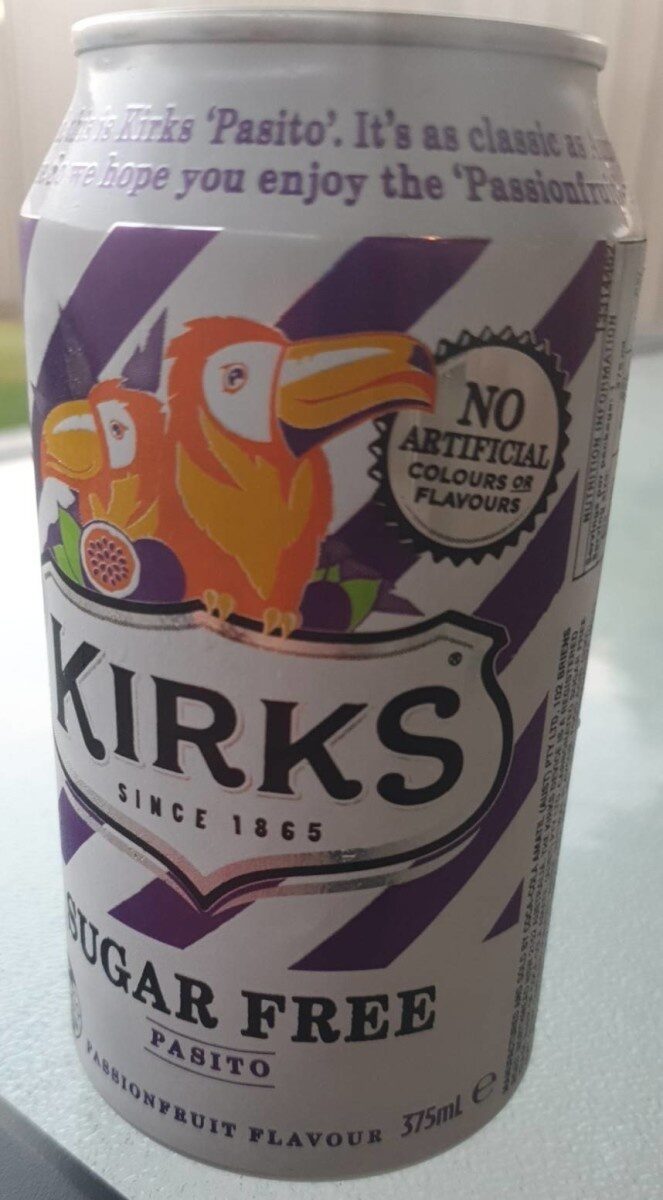
Sugar Free Pasito
Prefix 930 was issued by GS1 Australia. It tells you where the code was registered, not where the product was made.
Nutrition
| Nutrient | 100 g | Daily intake |
|---|---|---|
| Energy | 1 kcal | 0% |
| Fat | 0.00 g | 0% |
| of which saturates | 0.00 g | 0% |
| Carbohydrate | 0.00 g | 0% |
| of which sugars | 0.00 g | 0% |
| Protein | 0.10 g | 0% |
| Sodium | 0.01 g | 0% |
Open Food Facts, ODbL, record updated 23 July 2026 · Daily intakes: Food Standards Code, Standard 1.2.8 (FSANZ).
Ingredients
Purified water, natural flavour, food acid E330, natural colour (E161b, E120) sweetener (E950, E952, E955), preservative E211.
- E120CochinealColour
- E161bLuteinColour
- E211Sodium benzoatePreservative
- E330Citric acidAntioxidant · Sequestrant
- E950Acesulfame kSweetener
- E952Cyclamic acid and its Na and Ca saltsSweetener
- E955SucraloseSweetener
Source: Open Food Facts, ODbL · additive names and functions: Open Food Facts taxonomy.
Climate impact
Reference value for the category “Carbonated soft drinks without fruit juice”: 0.49 kg CO₂e per kg of product (closest product in Agribalyse).
Calculated by ADEME for the average product consumed in France, from field to plate. It describes the category, not this exact product.
Source: Agribalyse 3.1 (ADEME), Licence Ouverte, update of 30 June 2026 · category match: Open Food Facts taxonomy.
Countries of sale
Source: Open Food Facts, countries of sale reported by contributors.
Sources
- Product record
- PhotoOpen Food Facts contributors, CC BY-SA
- Reference valuesDaily intakes: Food Standards Code, Standard 1.2.8 (FSANZ).
- GS1 prefixPrefix ranges published by GS1
Spotted an error? It is fixed at the source, on Open Food Facts, and shows up here at the next update.